

The Time Centric Archetypes™
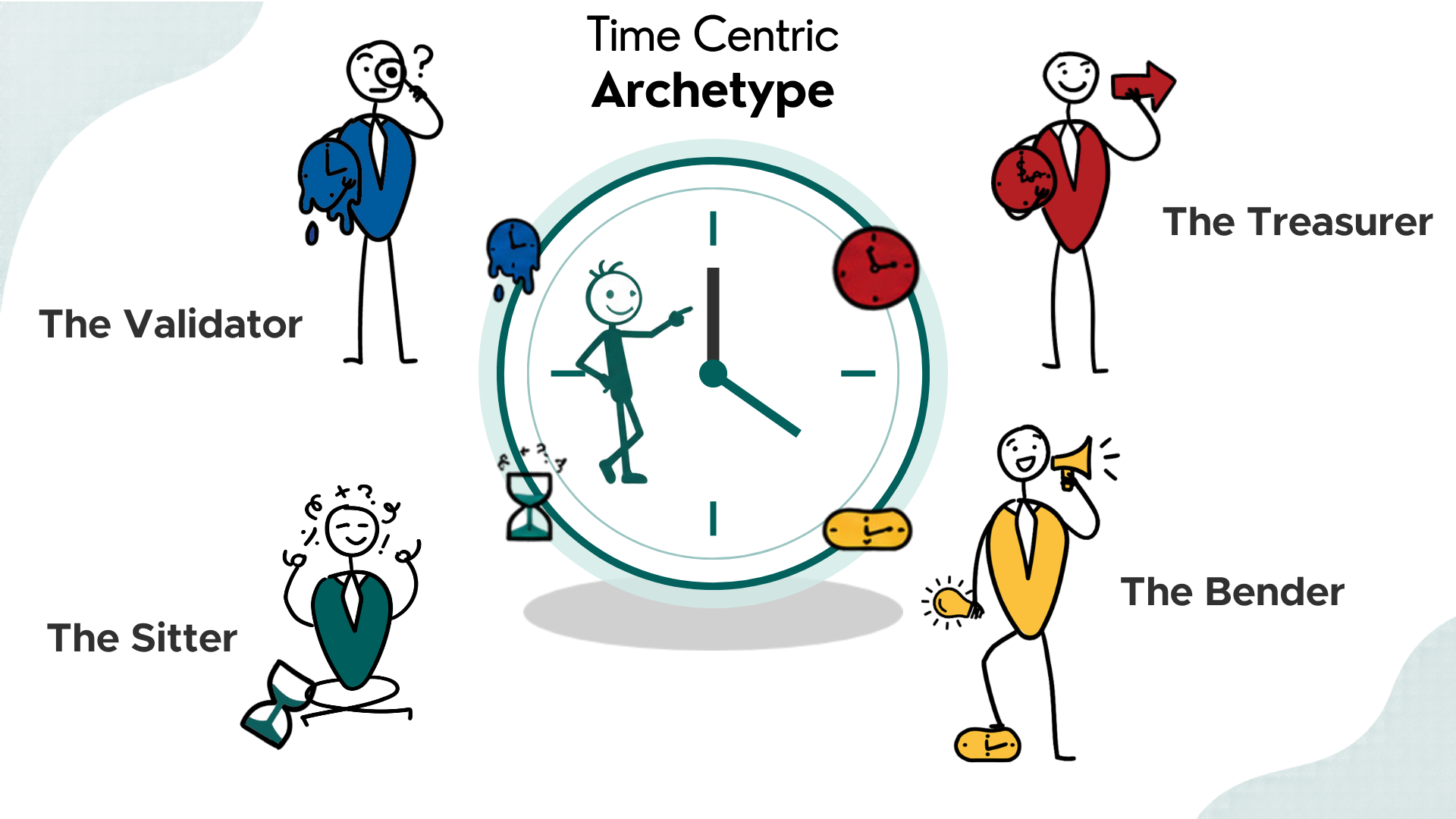
four ways people relate to time
Four ways people relate to time, and why standard productivity systems work for some people and fail for others. The model that sits behind every conversation The Time Fix has with a team.
What the model is, and why it was created
The Time Centric Archetypes describe how people relate to time: not how fast they work, or how much they get done, but the lens each person brings to a day. The model was created because good teams kept losing time for reasons that had nothing to do with effort or tools, and everything to do with the mix of people and how they work together.
Why standard systems work for some and fail for others
Most productivity advice assumes we all relate to time the same way. We do not. A system that frees a Treasurer can feel like a cage to a Bender. A deadline that focuses a Validator can stall a Sitter. When the system does not fit the people, the system is usually the first thing to go. The Archetypes explain the mismatch, so a team can build working ways that fit the people in the room.
The four Archetypes
Most people are a blend, with one or two leading. Each links to a full page.
Time Treasurer
Treats time as currency and guards it tightly.

"Time is money" is a way of life
Time Bender
Stretches time, shaping it around people, ideas and inspiration.

Time takes a back seat to people and novelty
Time Sitter
Nurtures time, often feeling it as pressure.

The capable, caring "mother hen" who keeps everyone going
Time Validator
Treats time as a tool for the best outcome, and will spend it for quality.

Getting it right matters more than getting it fast
How the four interact in a team
Here’s an example. The same email lands differently for each Archetype. One message in, four different conversations out:
“First draft by end of day,” no other context
A deadline and a boundary
replies with a clear yes or no and a time estimate
A rough target
replies with enthusiasm but no firm commitment
An unspoken expectation
worries about letting someone down and may go quiet until it is done
An incomplete brief
wants the exact scope, format and what "done" looks like before starting
Common friction points are everyday misunderstandings teams can talk about, never faults. Treasurers can find Validators slow; Validators can find Treasurers rushed. Benders can find Sitters and Validators too cautious. Sitters can feel unheard by faster-moving colleagues.
How the model is used
The Archetypes give us a shared language for how people relate to time, and we use it throughout our work with a team. Here is how that flows:
Each person first
Each person completes a validated behavioural profile and a 121 unpack, so they understand their own patterns first.
The team together
The team explores the Archetypes together, seeing how different relationships with time shape handovers, meetings, deadlines and decisions.
Adjust, don’t standardise
Whether we’re running a workshop, coaching individuals or working alongside leaders, the model helps the team adjust how they work together rather than trying to make everyone work the same way.
Leaders see the patterns
Leaders receive insight into the patterns across their team, so they can lead in a way that brings out the best in each person.
What it does and doesn't claim to measure
The Archetypes describe tendencies, not types. They’re not there to label anyone, box them in or limit what they can do. Most people are a blend, usually with one or two Archetypes leading, and that blend can shift depending on the work and the team around them. The online quiz is a fun snapshot rather than a scientific assessment. Each person’s full Archetype blend is uncovered through validated behavioural profiling, which is included in the Discover workshop series.
Find your leading Archetypes
Take the quiz for a fun snapshot. Or talk to us about running the full profile with your team.
make friends with your time
Let's talk about your team
A 30-minute conversation, no obligation. We listen first, then help you see what is really driving the busy.
Or send us a message answering this question:
Click the question above to write your reply